How to Trim Dog Nails at Home, Step by Step
Trimming a dog's nails comes down to one thing: cutting the hard tip without cutting into the quick, the living part inside the nail. This guide walks through how often to trim, how to find the quick on light and dark nails, how to hold the paw, and what to do if you cut too short.
Everything here comes from veterinary and breed-club sources, which we link as we go. If your dog has a medical condition or will not tolerate handling, ask your veterinarian or a groomer.
Key takeaways
- Most dogs need a trim every three to four weeks, according to the AKC, or about monthly, according to VCA.
- Cut only the tip, straight across, and stop before the curve of the nail.
- On dark nails, look for a chalky white ring: it marks where the quick begins.
- Keep styptic powder within reach before you start.
How often to trim
The American Kennel Club says most dogs need nail trims every three to four weeks, and that the right interval depends on how active your dog is and how fast the nails grow. VCA Animal Hospitals puts it at approximately once a month, noting that dogs walked regularly on hard surfaces may need trims less often, while inactive dogs may need them every three weeks.
Long nails are more than cosmetic. The AKC says they can turn a sound paw into a splayed foot, reduce traction and injure tendons.
Find the quick first
A dog's nail has two parts: the hard outer shell and the living pink quick inside it. Cutting into the quick causes bleeding and discomfort, so the whole job is about staying short of it.
For dark nails, the AKC says to watch for a chalky white ring: it marks where the quick begins.
The AKC also says regular trimming causes the quick to recede from the end of the nail.
How to hold the paw and cut
The AKC's method: pick up a paw and place your thumb on the pad of a toe and your forefinger on top of the toe. Push your thumb slightly up and back on the pad while pushing your forefinger forward, which extends the nail.
Clip only the tip of the nail, straight across. Avoid clipping past the curve of the nail, where you risk hitting the quick. Do not forget the dewclaws on the inner side of the paw.
Clippers, scissors or a grinder
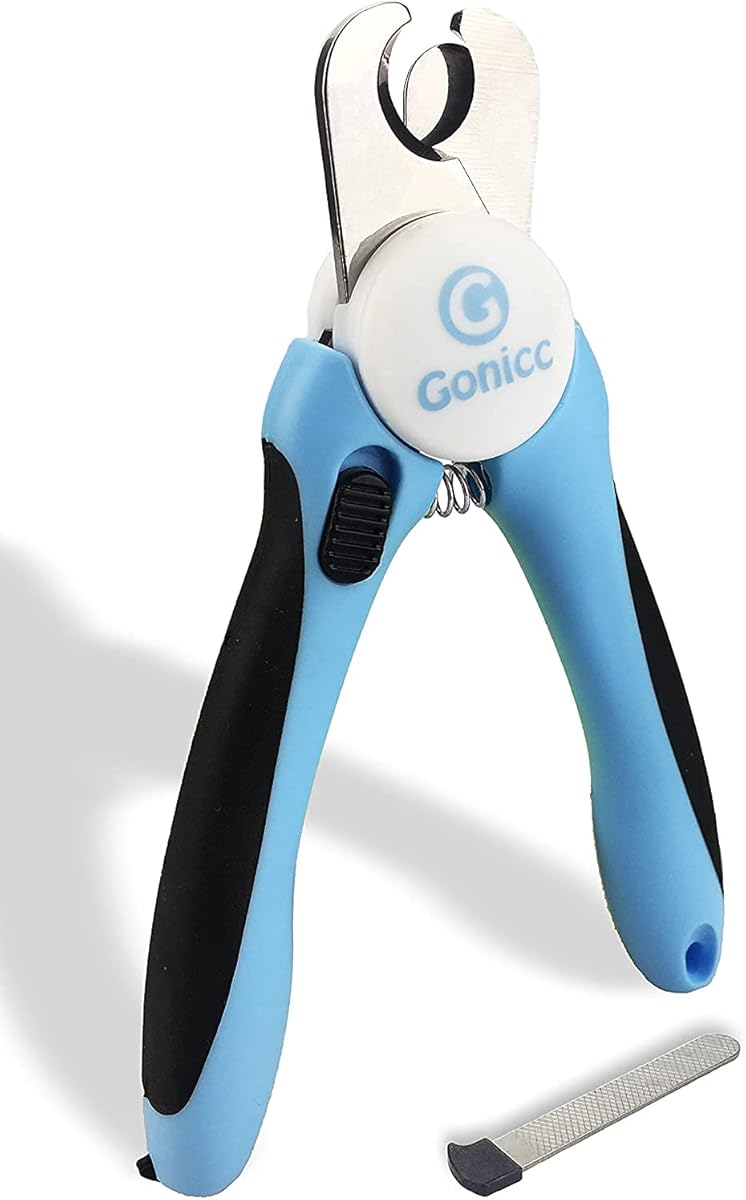
The AKC lists three common tools: nail scissors, guillotine-type clippers and grinders made for dogs. For clipper picks, see our roundup of the best dog nail clippers, each with a guard or safety stop.
If you use a grinder, the AKC advises grinding across the bottom of the nail and then carefully in from the tip, smoothing rough edges, and keeping long hair back so it does not catch. The AKC says both clippers and grinders are safe when used correctly, and that some dogs tolerate grinders better while others prefer clippers.
If you cut too short
The AKC says to keep styptic powder or another clotting powder on hand and apply it immediately if you cut a nail too short.
Kingsdale Animal Hospital explains that styptic powder contains ferric subsulfate, which helps the blood clot, and that you can dip the nail in it or apply it with a cotton swab. If you have none, the clinic names cornstarch, baking soda or flour pressed onto the nail as household alternatives, and pressure with a clean cloth or gauze for a few minutes.
Kingsdale advises calling your veterinarian if the bleeding does not stop, if the toe becomes red or swollen, or if your dog has a clotting disorder.
Getting your dog used to it
For puppies, the AKC describes a gradual introduction over about a week: first let the puppy sniff the clippers, then build up handling day by day until you trim a single nail around day five.
For coat care between trims, our FURminator vs undercoat rake comparison looks at two grooming tools.
FAQ
How often should I trim my dog's nails?
The AKC says most dogs need a trim every three to four weeks. VCA Animal Hospitals says about once a month, with active dogs on hard ground needing trims less often.
How do I find the quick on black nails?
The AKC says to watch for a chalky white ring, which marks where the quick begins.
What should I do if my dog's nail bleeds?
Apply styptic powder right away. Kingsdale Animal Hospital lists cornstarch, baking soda or flour as alternatives and suggests pressure with a clean cloth for a few minutes. Call a vet if it keeps bleeding.
Should I cut straight across or at an angle?
The AKC says to clip only the tip of the nail, straight across, and not past the curve.
Is a grinder better than clippers?
The AKC says both are safe when used correctly, and that some dogs tolerate grinders better while others prefer clippers.
Do I need to trim the dewclaws?
Yes. The AKC reminds you to include the dewclaws on the inner side of the paw.
Editor's note: Sources were read on September 24, 2026. This guide is general information, not veterinary advice.